
Services
Bridges
We fill gaps from missing teeth with custom bridges, including implant-supported options, helping restore your smile and bite.

Why choose us
Benefits of Bridges
Fill the Gap
A bridge replaces one or more missing teeth so your smile looks complete again.
Chew More Comfortably
Restoring missing teeth helps you bite and chew with more confidence.
Fixed, Not Removable
Our permanent bridges stay in place, so there is nothing to take out at night.
Implant-Supported Options
We also provide fixed implant-supported bridges for patients who are a good fit for dental implants.
Flexible Ways to Pay
We accept all major PPO plans, self-pay patients, and CareCredit financing.
When a single tooth goes missing, the teeth on either side often begin to drift toward the empty space, and the tooth above or below it can shift out of position too. A dental bridge closes that gap by anchoring a replacement tooth to the healthy teeth or implants next to it. Here at Double Oak Mountain Family Dentistry in Birmingham, bridges are a regular part of the restorative care we provide, and our dentists take the time to explain each option so you know exactly what you're choosing and why.
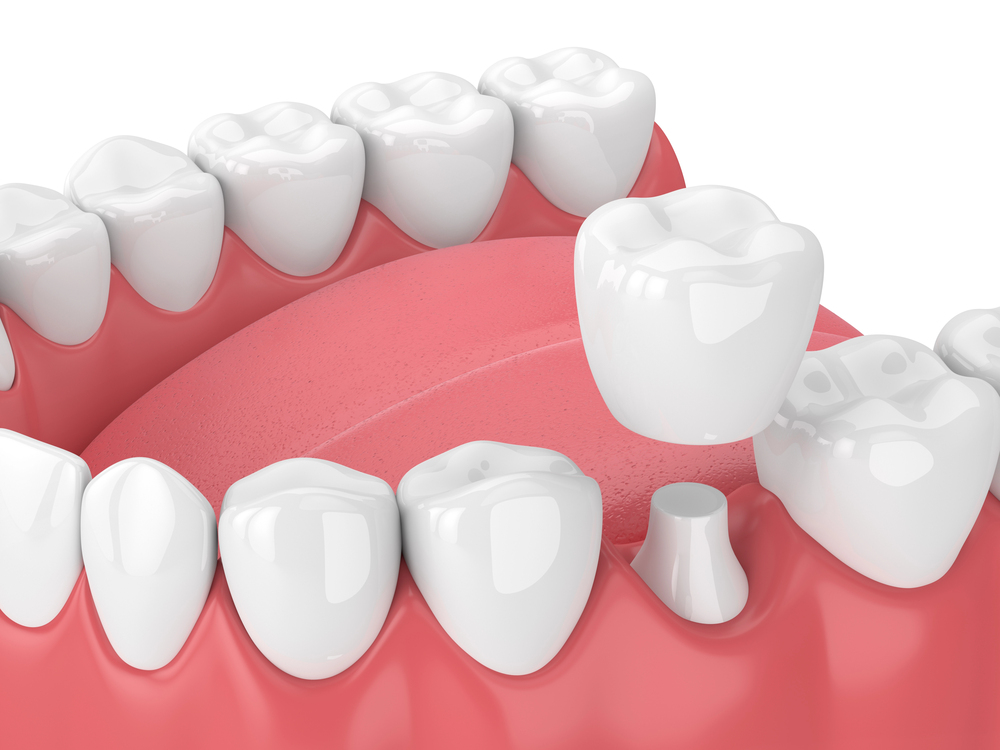
A traditional bridge is made of connected parts. The replacement tooth, called a pontic, fills the open space. On each side, a crown fits over a neighboring tooth, and those crowned teeth, called abutments, hold the pontic securely in place. Because the pieces are joined and cemented, a bridge stays in your mouth full-time. Unlike a partial denture, it doesn't come out at night.
We also offer implant-supported bridges, which rest on dental implants instead of natural teeth. This approach can be helpful when several teeth in a row are missing, or when the neighboring teeth aren't strong enough to support crowns. Since we provide crowns, dental implants, and both types of bridges in our own office, we can compare these options side by side during your visit.
Bridges help a wide range of people. A teenager or young adult may have lost a front tooth in a sports injury. A parent may have had a molar removed after a crack that couldn't be saved. An older patient may be ready to replace an aging partial denture with something fixed in place. As a family practice that sees patients of all ages, we meet people at many different stages of life, and the right replacement depends on each person's health, goals, and budget.
Bridges can also fit into a larger treatment plan. If a neighboring tooth needs a root canal or a new crown anyway, it may make sense to plan that work alongside the bridge. Because our team handles endodontic care and prosthodontic restorations in the same office, we can coordinate those steps without sending you elsewhere. You don't need a referral to see us.
Am I a good candidate for a dental bridge?
You may be a good candidate if you're missing one or more teeth and the surrounding teeth and gums are healthy enough to support a restoration. We confirm that with a thorough dental exam. During the exam, we look at the condition of the teeth next to the gap, the health of your gums, and how your upper and lower teeth come together when you bite.
Before your consultation, it helps to think through a few questions:
- Would you prefer a restoration that stays in place full-time or one you can remove?
- Are the teeth beside the gap already filled, crowned, or weakened?
- Are you open to dental implants as part of your plan?
- How important is it that the new tooth blends in with your smile?
There are no wrong answers to these questions. They simply help us guide the conversation. If appearance is a priority, we also offer cosmetic smile-design consultations, so your new tooth can be planned with your whole smile in mind.
How do I care for my bridge afterward?
You care for a bridge much like your natural teeth, with one extra step: cleaning underneath the replacement tooth. Food and plaque can collect in the small space under the pontic, so daily brushing and careful cleaning beneath the bridge help protect the abutment teeth and your gums. We'll show you how to do this during your visit and answer any questions you have.
Regular dental cleanings and exams with our dental hygienist and dentists matter just as much after you get a bridge as before. These visits let us check the bridge, the supporting teeth, and your gums over time. If something ever feels loose, cracked, or uncomfortable, call us. We offer emergency dental appointments, and when a problem can't wait, our team will work to see you promptly.
How can I pay for a dental bridge?
We accept all major PPO insurance plans, and our team will help you understand how your coverage may apply before treatment begins. If you don't have insurance, we welcome self-pay patients and will talk through your options openly with you.
For patients who would like to spread out the cost, we accept CareCredit financing. Because a bridge often involves several parts, such as crowns, the pontic, and possibly implants, we'll review the full plan with you so there are no surprises along the way.
How do I get started?
Getting started is as simple as scheduling a visit. Dr. James Samford, Dr. Payne Jennings, Dr. Claire Leverton, and Dr. Joseph Upton, along with the rest of our team, are glad to answer your questions and help you weigh your choices. While you're here, you can relax in our comfortable office, where every treatment room has a television. We're proud to have been voted one of the top 3 dentists in Birmingham two years in a row, and we'd love to help you smile with confidence again. Call our office today to book your bridge consultation.
The process
What to expect
- 1
Consultation and Exam
We examine your teeth, answer your questions, and talk through the bridge options that fit your needs.
- 2
Preparing Your Bridge
Our team prepares the supporting teeth or implants and places your custom bridge in our comfortable office, where every room has a television.
- 3
Ongoing Care
We keep your bridge and smile healthy with regular cleanings and exams at your routine visits.
Questions
Bridges FAQs
Will my insurance cover a dental bridge, and what are my payment options?
Many dental plans include some coverage for bridges, and we accept all major PPO insurance plans. We also welcome self-pay patients and offer financing through CareCredit. Our team is happy to review your benefits with you before treatment so you know what to expect.
Does getting a bridge hurt?
Most patients find the process very manageable, because we numb the area before preparing the teeth that support the bridge. We work hard to keep you comfortable throughout your visit, and every room has a television to help you relax. Some tenderness afterward is common and usually fades as you adjust.
How long does it take to get a dental bridge?
A traditional bridge usually takes more than one visit. We prepare the supporting teeth and take impressions, then place your permanent bridge once it is ready. If you choose an implant-supported bridge, the timeline is longer because the implants need time to heal first.
How long will my bridge last?
With good daily brushing, cleaning under the bridge, and regular checkups, a bridge can serve you well for many years. How long yours lasts depends on your oral health, your habits, and the condition of the supporting teeth or implants. Our hygienists and dentists keep an eye on your bridge at every visit.
Am I a good candidate for a bridge, or are there other options?
A bridge is often a good fit if you are missing one or more teeth and have healthy teeth or implants nearby to support it. Depending on your needs, we may also discuss dental implants, implant-supported bridges, or partial dentures. During your exam, Dr. Samford, Dr. Jennings, Dr. Leverton, or Dr. Upton will walk you through the choices that make the most sense for your smile.